
Could Cyberattacks Shut Down Our Food, Water and Power? The Growing Infrastructure Threat
Imagine walking into your local supermarket one morning and discovering that entire freezer aisles have been emptied. The electricity is working, the lights are on, and employees are still serving customers, but thousands of dollars’ worth of food have been destroyed overnight. There was no equipment failure, no storm, and no power outage. Instead, someone sitting behind a computer remotely changed the temperatures of the store’s refrigeration systems.
This isn’t a hypothetical scenario. On November 2, 2026, supermarkets across Europe experienced exactly this kind of disruption, with some refrigeration systems reportedly reaching temperatures of 50°C (122°F). Just one day later, on November 3, the European Commission introduced additional emergency preparedness guidance, encouraging citizens to become more self-sufficient during the first 72 hours of a crisis. Although there is no evidence that the announcements and cyberattacks were directly connected, their timing raises an uncomfortable question: How vulnerable are the systems we depend on for everyday survival?
The answer becomes increasingly interesting when we look beyond supermarkets. Drinking-water treatment facilities, electrical substations, transportation networks, hospitals, and food distribution centres all rely on digital technology to function efficiently. Many of these systems were designed decades ago, before modern cybersecurity threats became an everyday concern. As artificial intelligence makes certain cyberattack techniques faster and more accessible, the possibility of disruptions affecting physical infrastructure deserves serious consideration.
Why Are Governments Suddenly Talking About Emergency Preparedness?
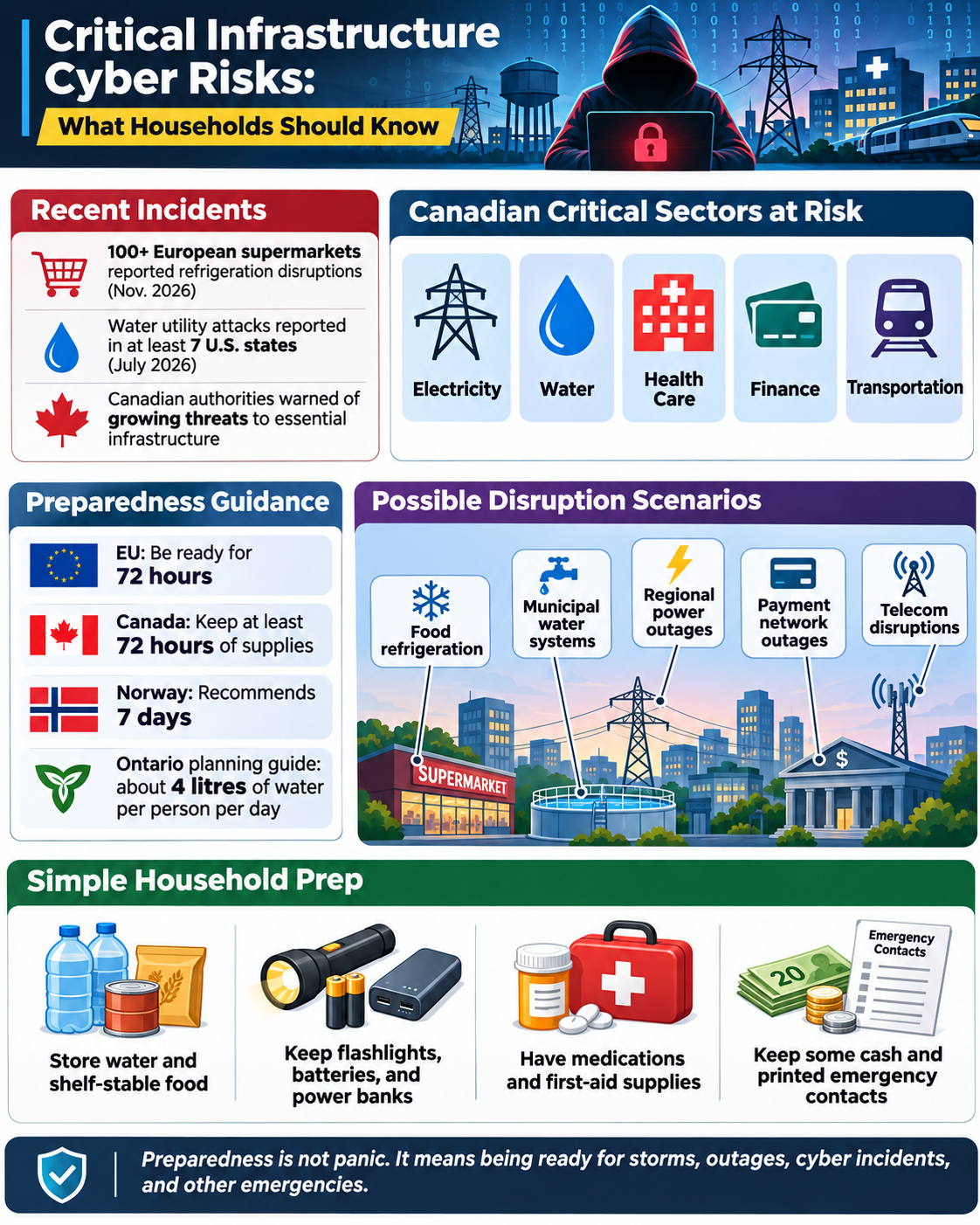
Governments have encouraged emergency preparedness for decades, but the conversation has become noticeably more prominent as geopolitical tensions, extreme weather, and cybersecurity threats converge. The European Union adopted its Preparedness Union Strategy in March 2025, with the goal of strengthening society’s ability to withstand a wide range of emergencies. On November 3, 2026, the European Commission expanded that effort with practical guidelines covering emergency supplies, preparedness education, accessibility, and public communication. A central recommendation is that households should be capable of meeting their essential needs for at least 72 hours while emergency assistance is organized.
Other countries have adopted similar recommendations, although their suggested timelines differ. Norway increased its recommended household preparedness period from three days to one week in May 2024, specifically encouraging residents to consider situations where electricity, water, telecommunications, or payment systems become unavailable. Canada continues to advise households to maintain enough supplies for at least 72 hours, while provinces and municipalities provide additional guidance suited to local conditions. These differences reflect national preparedness policies rather than evidence that any particular government knows a major catastrophe is approaching.
The important distinction is that these recommendations cover many potential emergencies, including storms, floods, equipment failures, pandemics, sabotage, and armed conflict. Cyberattacks are one piece of that much larger picture, not the sole explanation for renewed preparedness campaigns. Still, their inclusion is significant because modern infrastructure is increasingly interconnected, creating opportunities for disruptions to spread beyond the original target. The official European Commission preparedness announcement offers a useful overview of how European authorities are approaching these risks.
The Hidden Technology Keeping Modern Society Running
Most people associate cyberattacks with stolen passwords, ransomware, fraudulent emails, or compromised websites. However, another category of technology operates quietly behind the scenes, controlling the physical equipment that keeps modern society functioning. Known as operational technology, or OT, these systems regulate everything from water pressure and industrial temperatures to electrical equipment and manufacturing machinery. Unlike traditional computer systems that primarily store and process information, operational technology interacts directly with physical processes.
Many industrial facilities use programmable logic controllers, or PLCs, to manage equipment automatically, while SCADA systems allow operators to monitor and supervise entire networks of devices. A municipal water utility, for example, might use these systems to monitor reservoir levels, control pumps, measure pressure, and observe treatment operations. Supermarkets use similar technologies to monitor refrigeration temperatures, manage defrost cycles, and detect equipment problems across multiple locations. These tools make operations more efficient, but poorly secured remote connections can introduce risks that did not exist when equipment was controlled exclusively on-site.
Three scenes help illustrate the connection between cybersecurity and physical infrastructure. Together, they show how ordinary equipment can become part of a much larger digital security problem.
The November 2026 Supermarket Cyberattacks: A Warning From Europe
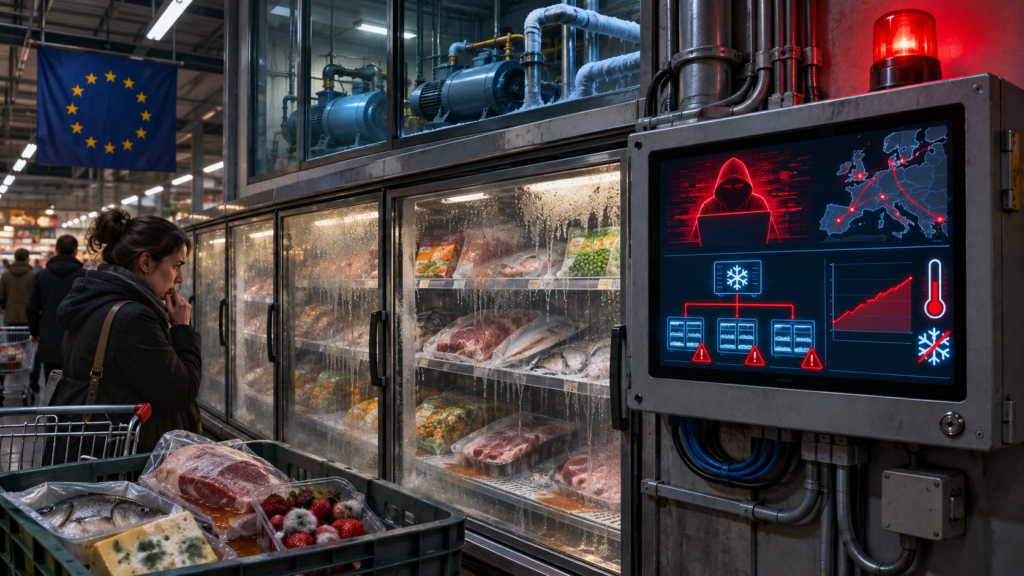
On November 2, 2026, supermarket operators in several European countries reported unusual refrigeration problems that were linked to cyber intrusions. Affected retailers included major chains operating in Sweden, Belgium, Luxembourg, Ireland, and other countries, with reports of more than 100 affected stores. In some locations, refrigeration temperatures rose dramatically, forcing employees to remove fresh and frozen products from sale. One Swedish supermarket reported that its freezers had been remotely set to 50°C, effectively destroying the food stored inside them.
The incidents followed a similar wave of attacks in October that affected hundreds of refrigeration systems in France and neighbouring countries. Investigators examined weaknesses in older remotely accessible refrigeration controllers, including equipment that no longer received regular security updates. Some affected systems had inadequate access protections, while others exposed industrial controls through internet connections that were never intended to be publicly accessible. These weaknesses provided opportunities for attackers to interfere with temperatures and operating settings without physically entering the stores.
What makes these attacks remarkable is their simplicity compared with the consequences. Attackers did not need to shut down an entire electricity grid or compromise a supermarket’s financial systems to create substantial economic losses. Manipulating the temperatures of connected refrigerators was enough to destroy inventory, interrupt business operations, and force retailers to reassure customers about food safety. The attacks also demonstrated how equipment purchased for convenience and efficiency can become a liability when cybersecurity maintenance is neglected.
There are important limits to what these incidents prove. Investigations were still underway as of November 3, and authorities had not conclusively identified the perpetrators or established that every affected location was part of one centrally coordinated operation. There was also no evidence that artificial intelligence was responsible for these particular refrigeration attacks. Most importantly, affected supermarkets generally remained open, distribution networks continued functioning, and the incidents did not create a continent-wide food shortage.
Nevertheless, the implications extend beyond refrigeration. If relatively ordinary connected equipment can be manipulated remotely, it is reasonable to examine what might happen when similar weaknesses appear in infrastructure responsible for more essential services. Food refrigeration is inconvenient and expensive to lose, but disruptions involving drinking water, electricity, or wastewater treatment could create more serious public safety concerns. That is where the investigation becomes particularly relevant.
Could Cyberattacks Disrupt Drinking-Water Systems?
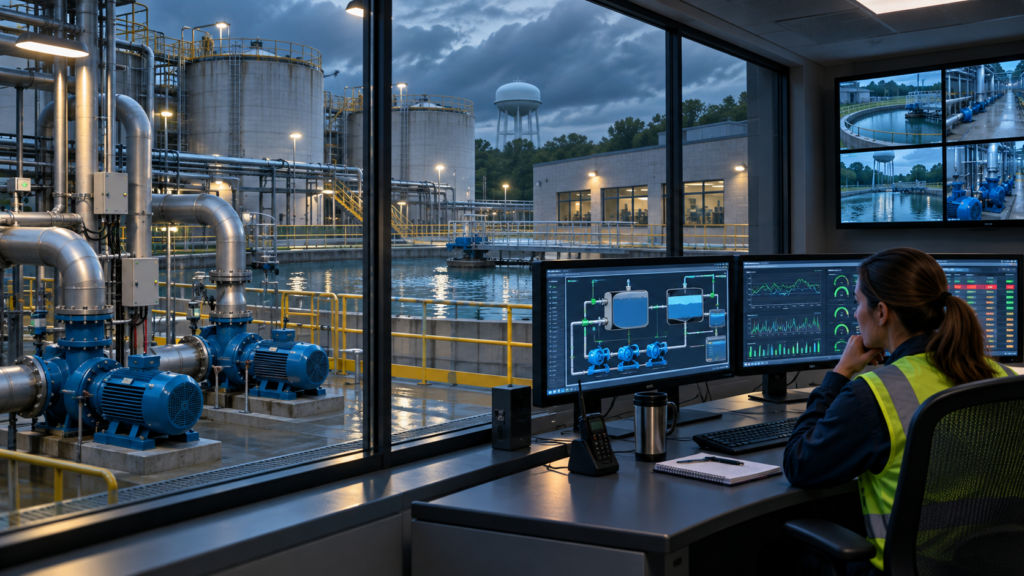
Municipal drinking-water facilities rely on carefully coordinated processes involving pumping, filtration, treatment, storage, and distribution. Digital controllers help operators maintain water pressure, monitor equipment, and keep systems operating within established safety limits. When these controllers are compromised, the consequences depend on which equipment is affected and whether operators can maintain control through backup systems or manual procedures. A successful intrusion does not automatically mean the drinking water becomes contaminated, but it can interrupt operations and create conditions requiring additional safety precautions.
On July 30, 2026, the FBI and the United States Environmental Protection Agency issued a public warning about cyberattacks targeting industrial controllers used by water and wastewater utilities. Since July 27, operators in at least seven American states had reported incidents involving remotely accessible programmable logic controllers. Attackers interfered with device configurations and access controls, sometimes preventing utility personnel from properly monitoring or operating their equipment. Reported consequences included water pressure losses and flooding, demonstrating that these intrusions were capable of producing real-world effects.
Water pressure is particularly important because distribution systems must maintain appropriate operating conditions to deliver safe drinking water. When pressure drops significantly, utilities may need to investigate whether contaminants could have entered the system and issue precautionary advisories while conducting inspections or testing. In other situations, operators may isolate affected equipment, switch to manual procedures, or temporarily suspend parts of their operations. The resulting inconvenience could range from localized service interruptions to more substantial disruptions, depending on the design and resilience of the affected utility.
These incidents also highlight why cybersecurity protections cannot end at the office computer network. A facility may have strong protections for employee email and financial records while older industrial controllers remain accessible through poorly maintained remote connections. The underlying technology often performs reliably for many years, which makes replacing or upgrading it expensive and operationally complicated. Unfortunately, reliable machinery and secure digital connectivity are not necessarily the same thing.
From Stuxnet to Modern Cyber Warfare: What Israel and Iran Taught the World
The idea of using computer software to interfere with physical infrastructure is not new. One of the most famous examples emerged in 2010, when researchers discovered a sophisticated computer worm known as Stuxnet, which targeted industrial control equipment associated with Iran’s nuclear enrichment program. The malware was designed to interfere with the operation of centrifuges used at the Natanz nuclear facility while concealing aspects of its activity from monitoring systems. Investigative reporting later attributed the operation to cooperation between the United States and Israel, although the precise extent of its physical damage has remained a subject of analysis and debate.
Stuxnet represented an important turning point because it demonstrated that malicious software could potentially produce physical damage without a conventional military strike. Rather than simply stealing information, the attackers attempted to manipulate machinery and disrupt an industrial process. The operation required highly specialized knowledge of its target, considerable technical resources, and sophisticated methods of gaining access to protected systems. It challenged the assumption that industrial equipment was safe from cyberattack simply because it was separated from ordinary public computer networks.
The rivalry between Israel and Iran produced another relevant episode in 2020, when attackers linked by investigators to Iran attempted to compromise Israeli water infrastructure. Israeli officials reported that the intrusion was detected and prevented from causing significant harm to drinking-water supplies. Shortly afterward, a cyberattack disrupted operations at Iran’s Shahid Rajaee port, causing logistical problems, with reports attributing the operation to Israel as a possible response. Although aspects of both incidents remain disputed, they illustrate how water utilities, transportation networks, and other civilian infrastructure can become targets during geopolitical confrontations.
The difference between 2010 and 2026 is not simply that computers have become more powerful. Modern facilities rely on more connected devices, cloud-based management tools, remote maintenance systems, and digital supply chains, creating a much larger collection of potential entry points. At the same time, many less sophisticated attackers can exploit familiar weaknesses without building anything resembling Stuxnet. The combination of expanding connectivity, aging equipment, and increasingly accessible attack tools makes the modern threat landscape fundamentally different.
Canada’s Critical Infrastructure: How Vulnerable Are We?
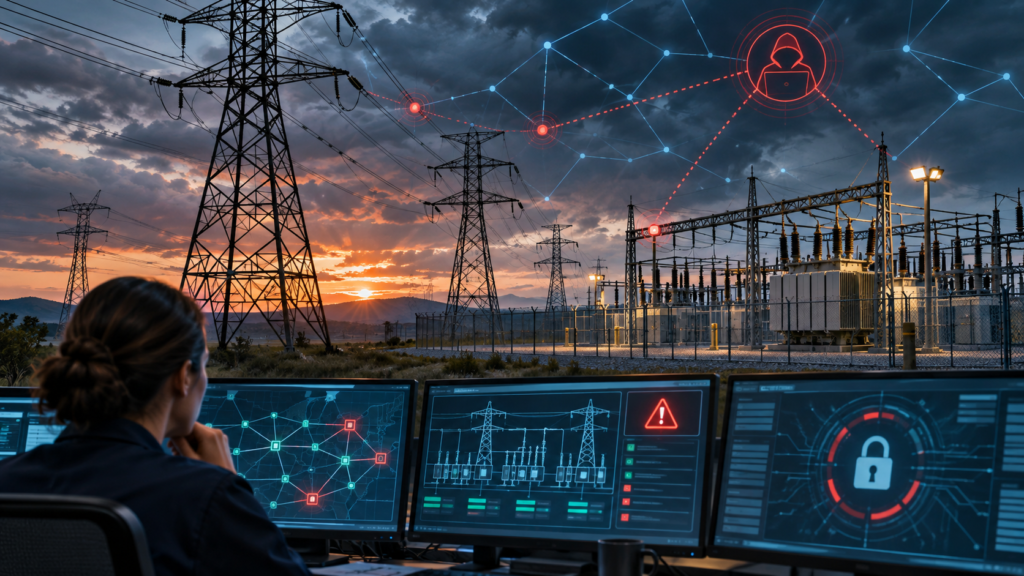
For Canadians, the subject deserves special attention because so many essential services depend on infrastructure spread across enormous geographic distances. Electricity generation and transmission, municipal water systems, natural gas distribution, railway networks, telecommunications, and agricultural supply chains all support everyday life. These services are operated by a mixture of provincial agencies, municipalities, private businesses, and other organizations with different budgets, security capabilities, and equipment lifecycles. Protecting the entire system therefore requires coordination across organizations that may not share the same technology or resources.
On November 26, 2025, Canada’s Communications Security Establishment issued a joint government statement warning that malicious cyber activity targeting essential infrastructure was increasing. The statement specifically identified electricity, water, health care, finance, and transportation as sectors facing serious threats from criminal groups and state-linked actors. Canadian authorities also warned that hostile governments could attempt to establish access to infrastructure networks in advance, potentially positioning themselves to cause disruption during a future political or military crisis. This distinction matters because an attacker may seek access long before deciding whether to use it.
Even more concerning, Canada has already experienced cyber intrusions involving operational technology. According to the Canadian Centre for Cyber Security, several incidents occurred in October 2025, including one in which a pro-Russia non-state actor manipulated water pressure valve controls at a municipal water system, causing minor interruptions to service. Another actor accessed information from an airport fuel-tank monitoring system, while a separate intrusion involved unauthorized changes to temperature and humidity controls in a grain-drying facility. Authorities did not report major damage from these incidents, but they demonstrate that the threat extends beyond theoretical discussions.
Canada’s response has become increasingly focused on maintaining essential services during severe cyber incidents. In April 2026, the Canadian Centre for Cyber Security launched its Critical Infrastructure Resilience and Escalated Threat Navigation initiative, known as CIREN. Among its recommendations, infrastructure operators are encouraged to prepare for prolonged isolation of critical systems, potentially lasting up to three months, and to establish independent operating procedures and recovery plans. That does not mean officials expect Canadian households to lose power or water for three months; it means operators are planning for circumstances in which compromised technology must remain disconnected while services are protected and restored.
The Canadian Cyber Centre has also issued a warning describing an active international campaign in which attackers are using artificial intelligence to help target exposed industrial controllers. Its official advisory on AI-assisted attacks against industrial control systems explains that attackers have used AI-generated scripts to support malicious activity against equipment associated with critical infrastructure. Canadian authorities assess that the possibility of increasingly disruptive incidents is growing, although Canada has not yet experienced a high-impact industrial-control cyber incident of the kind that would affect essential services on a national scale.
Why Canadian Households Should Pay Attention
Canada’s climate adds an important dimension to infrastructure preparedness, particularly during winter. A prolonged electricity outage can affect residential heating, communications, refrigeration, and water systems, depending on how a home is equipped. Rural properties relying on electrically powered well pumps may lose running water even when nearby municipal systems continue functioning. In urban areas, apartment residents may face different problems involving elevators, building access, heating equipment, and access to stored supplies.
However, Canada’s infrastructure is not one giant computer network that can simply be switched off by a single hacker. Utilities use multiple layers of protection, equipment redundancy, backup power, network segmentation, and emergency operating procedures, although their capabilities vary. A localized disruption is generally more plausible than a coordinated nationwide collapse involving every essential service simultaneously. Understanding these differences helps turn a frightening subject into a realistic assessment of what households should actually prepare for.
How Artificial Intelligence Could Change Future Infrastructure Attacks
Artificial intelligence introduces a new variable into an already complicated cybersecurity environment. Advanced AI tools can help attackers analyze information, generate software, develop convincing phishing messages, and automate portions of activities that previously required considerably more manual work. The UK’s National Cyber Security Centre warned in its November 2026 annual review that AI was likely to increase the speed, efficiency, and scale of existing cyberattack techniques. The central concern is not necessarily that intelligent machines will independently decide to sabotage infrastructure, but that human attackers may become more effective through automation.
This is particularly relevant to smaller criminal organizations and ideologically motivated groups that lack the resources of national intelligence agencies. Tasks involving software development, information analysis, and identifying weaknesses may become easier when supported by sophisticated AI systems. Meanwhile, defenders are also using AI to identify anomalies, analyze suspicious activity, and improve their response capabilities. The technology therefore creates a competition between attackers and security teams rather than providing an automatic advantage to either side.
There is another important reality: many serious cybersecurity incidents still depend on remarkably ordinary mistakes. Weak passwords, outdated equipment, poorly configured remote access, and neglected software updates can create vulnerabilities without requiring advanced artificial intelligence at all. The European refrigeration attacks are a useful reminder that a decades-old security problem can be more consequential than a futuristic attack technique. AI may increase the scale of future cybercrime, but basic security practices remain essential.
Five Realistic Cyberattack Scenarios That Could Disrupt Everyday Life
Nobody can reliably predict the next major infrastructure cyberattack, and hypothetical situations should never be confused with confirmed intelligence about an approaching threat. However, existing incidents help us identify plausible ways that cyber disruptions could affect ordinary households. The following scenarios are possibilities rather than forecasts, with consequences depending heavily on the scale of the intrusion and the protections available.
- 1. Food distribution and refrigeration disruptions. Attackers compromise equipment or software used by retailers, warehouses, or transportation providers, interrupting deliveries or damaging perishable inventory. Individual stores might experience temporary shortages of refrigerated products while unaffected locations continue operating. A more extensive disruption involving a shared logistics provider could create wider delivery delays, although retailers would have opportunities to redirect shipments and restore operations.
- 2. Municipal water-service interruptions. A compromised industrial controller interferes with pumps, pressure monitoring, or treatment supervision at a water utility. Operators may temporarily restrict service, switch to manual controls, or issue precautionary drinking-water advisories while confirming system safety. The most likely effects would depend on the particular facility and its ability to isolate affected equipment.
- 3. Regional electricity disruptions. Cybercriminals or state-linked actors interfere with systems used to monitor or operate portions of an electrical network. Protective mechanisms and experienced utility personnel may limit damage, but an intrusion affecting critical equipment could complicate restoration and interrupt electricity in a particular region. In winter, even a relatively localized outage could produce serious secondary problems for households without alternative heating arrangements.
- 4. Banking and payment network outages. A major cyber incident disrupts payment processing, online banking, or financial communications. Shoppers may temporarily lose the ability to make electronic purchases, even when stores remain open and food is available. Cash, alternative payment arrangements, and reliable communication would become especially useful during a prolonged disruption.
- 5. Telecommunications and emergency communications failures. An attack affecting communications infrastructure prevents some residents from accessing mobile data, internet services, or important digital notifications. The situation becomes more complicated if an unrelated electricity or weather emergency occurs simultaneously. Emergency communication networks have protections and redundancy, but households should still consider how they would obtain verified information without their usual internet connection.
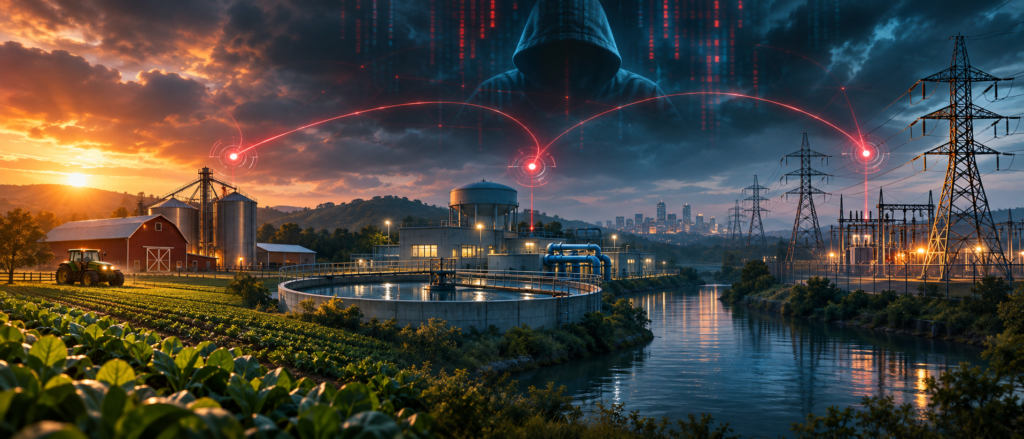
The most concerning possibility is not necessarily one enormous attack, but the way separate disruptions could compound one another. Electricity supports communications and pumping equipment, while telecommunications help operators monitor remote facilities and coordinate repairs. Transportation networks depend on fuel, payment systems, logistics software, and communications, creating dependencies that are not always obvious to consumers. A disruption affecting one essential service may therefore create problems elsewhere, although the extent of any cascading effect would depend on safeguards, backup systems, and the ability of operators to respond.
How to Prepare Your Household for 72 Hours—or Seven Days
The practical response to these risks does not require building an underground bunker or spending thousands of dollars on survival equipment. Most emergency preparedness recommendations begin with ordinary household necessities that are useful during storms, floods, equipment failures, and unexpected service interruptions. The goal is to remain safe and reasonably comfortable while emergency crews and infrastructure operators restore normal services. For most households, building a three-day reserve is a sensible starting point before gradually expanding supplies toward one week.
Water: The Most Important Supply
Water should be the first priority because interruptions to drinking-water service can affect cooking, hygiene, and basic household routines. Health Canada identifies two litres per person per day as a basic drinking-water supply, with additional water recommended for cooking and cleaning. Ontario and the City of Ottawa recommend planning for approximately four litres per person per day, providing a more practical allowance for household needs. At that rate, a family of four would require 48 litres for three days or 112 litres for one week, with additional supplies for pets or special medical requirements.
| Household size | 72-hour supply | Seven-day supply |
|---|---|---|
| 1 person | 12 litres | 28 litres |
| 2 people | 24 litres | 56 litres |
| 3 people | 36 litres | 84 litres |
| 4 people | 48 litres | 112 litres |
| 5 people | 60 litres | 140 litres |
Store drinking water in clean, food-safe containers and keep it accessible in case an evacuation becomes necessary. Commercial bottled water is convenient, but reusable storage containers can also form part of a household emergency supply when properly maintained. If local authorities issue a boil-water or do-not-consume advisory, follow the specific instructions provided, since boiling does not remove every possible type of contamination. A water filter or purification tablet can be a useful backup, but it should never be assumed to make every contaminated water source safe.
Food: How Much Should You Actually Store?
Emergency food does not need to consist entirely of specialized survival rations. Canned beans, vegetables, soups, fish, meat, fruit, nut butter, crackers, energy bars, and shelf-stable milk can provide a useful foundation. For a family of four, a reasonable three-day starting inventory might include twelve cans of protein-rich foods, six cans of vegetables or fruit, and enough shelf-stable grains, breakfast foods, snacks, and other ready-to-eat items to complete twelve person-days of meals. This is a planning example, not a universal nutritional formula; actual requirements depend on portion sizes, calories, ages, health needs, and what the household will realistically eat.
One of the simplest methods is to plan three complete days of meals before purchasing supplies. Write down breakfast, lunch, dinner, and snacks for every household member, then calculate the amount of food required without relying on refrigeration or an electric stove. If you have an approved and safely usable backup cooking method, additional options become available, but an emergency menu should still include foods that require no heating. Keep a manual can opener with the supplies and rotate stored products into your normal grocery routine so they do not sit forgotten for years.
Equipment That Makes a Disruption Easier to Manage
Food and water are essential, but several inexpensive items can make an enormous difference when ordinary services are interrupted. Most can be purchased gradually, and many households already own much of what they need. The objective is to solve practical problems rather than accumulate specialized equipment that may never be used.
- Lighting and communication: LED flashlights, spare batteries, a battery-powered or hand-crank radio, and charged power banks.
- Health and hygiene: First-aid supplies, required medications, sanitation products, and supplies for children, older adults, or anyone with specific care needs.
- Financial preparedness: A modest amount of cash in small denominations in case electronic payment systems are temporarily unavailable.
- Food preparation: A manual can opener, ready-to-eat meals, and any appropriate backup cooking equipment used strictly according to its safety instructions.
- Important information: Printed emergency contacts, medication details, copies of essential records, and a household communication plan.
A little preparation also helps protect the food already inside your refrigerator and freezer. According to Health Canada, a refrigerator that remains closed can generally keep food cold for approximately four hours during a power outage, while a full freezer may keep food frozen for around 48 hours. These estimates depend on conditions, and food safety should be assessed using reliable temperature information rather than appearance or smell alone. Never operate charcoal grills, camping stoves, generators, or other fuel-burning equipment indoors, in garages, or near openings where carbon monoxide could enter the home.
Are We Overreacting to the Threat of Cyber Warfare?
There is a reasonable argument that discussions about infrastructure cyberattacks can become exaggerated, especially when dramatic scenarios circulate on social media. Major utilities invest in cybersecurity, maintain emergency response procedures, and often employ systems that can isolate failures before they spread. Many attempted cyberattacks never produce meaningful physical effects, and even successful intrusions may be contained quickly. The November supermarket attacks, for example, disrupted refrigeration at affected stores without shutting down Europe’s wider food distribution system.
It is also important to recognize that emergency preparedness announcements do not necessarily reveal secret intelligence about an imminent attack. Governments have many reasons to encourage household resilience, including extreme weather, aging infrastructure, international instability, and lessons from previous emergencies. The fact that authorities recommend storing food and water should not be interpreted as proof that they expect society to collapse. Public recommendations are generally intended to reduce the consequences of emergencies rather than predict exactly when they will happen.
However, skepticism should not become complacency. The documented cyber intrusions involving water systems, industrial equipment, and supermarket refrigeration demonstrate that physical infrastructure is already being targeted. Canada’s own cybersecurity authorities have acknowledged both previous domestic incidents and the increasing sophistication of malicious activity against operational technology. The challenge is finding a sensible middle ground between dismissing the threat entirely and assuming the worst possible outcome is inevitable.
Final Verdict: The Cybersecurity Threat Is Real, but Preparation Should Be Practical
Modern society depends on digital systems that most of us rarely notice until something goes wrong. The refrigeration attacks across Europe, attempted intrusions into water infrastructure, and historical cyber operations involving Iran and Israel reveal how computer security can influence physical services. Artificial intelligence is adding another layer of complexity by helping attackers automate certain tasks, even as security professionals develop stronger defensive capabilities. None of this proves that a nationwide blackout, water emergency, or food shortage is imminent, but it does justify taking infrastructure resilience seriously.
Perhaps the most useful lesson is that emergency preparedness does not require predicting the next crisis. A household with stored drinking water, several days of food, alternative lighting, basic medical supplies, and a reliable communication plan is better prepared for cyber incidents, severe storms, and ordinary equipment failures alike. Those supplies also provide peace of mind without requiring a commitment to extreme survivalism or expensive equipment. The more prepared individual households become, the more emergency responders can concentrate on people who need immediate assistance.
The question, then, is not whether an unprecedented cyberattack will happen tomorrow, next year, or ten years from now. It is whether our growing dependence on interconnected technology has changed the way we should think about everyday preparedness. The evidence suggests that infrastructure cybersecurity is no longer just a concern for government agencies and computer specialists. It is increasingly relevant to anyone who expects clean water from the tap, electricity from the outlet, and food on supermarket shelves.
Being prepared is not the same as being afraid. It simply means recognizing that the systems supporting our daily lives are valuable, complicated, and not entirely invulnerable.