
Chinese AI Innovations Are Taking a Different Path in 2026
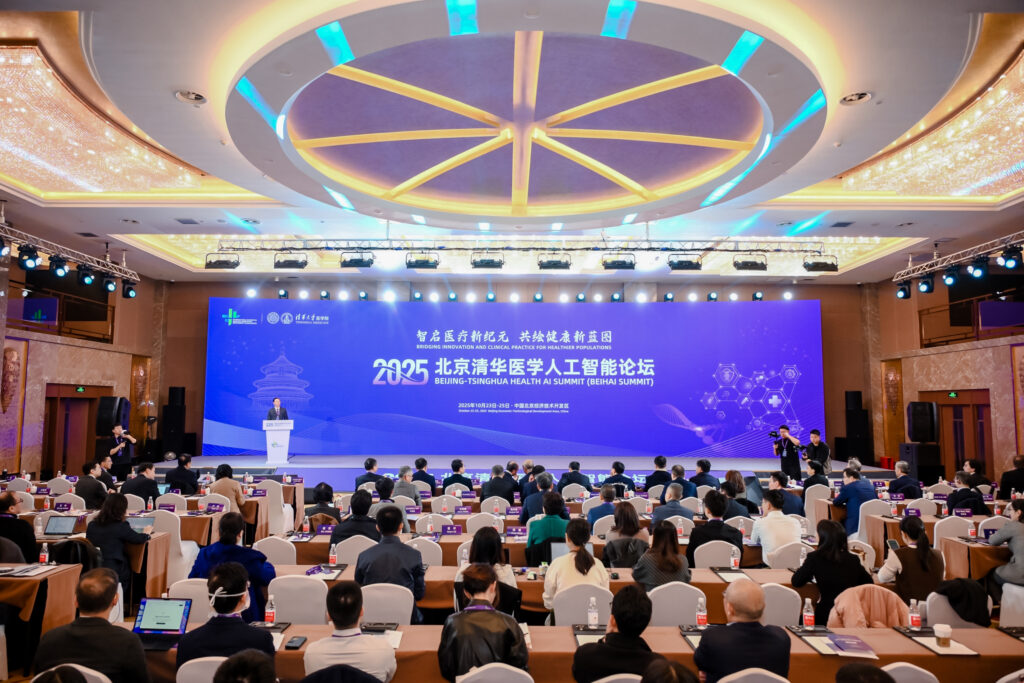
In January 2026, an unusually candid conversation unfolded in Beijing—one that revealed more about Chinese AI innovations than any press release, benchmark chart, or corporate keynote could. At AGI-Next, a frontier AI summit co-hosted by Tsinghua University and Zhipu AI, China’s leading AI researchers spoke with rare openness about limitations, tradeoffs, and uncomfortable truths shaping the country’s AI future.
This was not a marketing event. It was a working-scientist discussion—technical, philosophical, and often self-critical. Leaders from Moonshot AI, Alibaba Qwen, and Tencent openly discussed compute scarcity, open-source realities, cultural risk aversion, and why the next AI breakthrough may not come from scaling larger models.
What emerged was a clearer picture of China’s AI ecosystem: not “catching up,” not “falling behind,” but diverging under constraint—and searching for a paradigm shift that changes the rules entirely.
A Summit That Actually Mattered
AGI-Next was convened by Tang Jie, founder and chief scientist of Zhipu AI and a longtime professor at Tsinghua. His reputation allowed competitors and collaborators to speak frankly in the same room—something rare in any AI ecosystem.
Key participants included:
- Tang Jie (Zhipu AI)
- Yang Zhilin (Moonshot AI, creator of Kimi)
- Lin Junyang (Technical lead for Qwen at Alibaba)
- Yao Shunyu (Principal AI researcher at Tencent, formerly OpenAI)
A full transcript circulated online after the event. What matters more than the transcript, however, are the themes that surfaced repeatedly—themes that expose the real strategic position of Chinese AI today.
Open Source: Strength, Strategy, and Self-Deception
China has become the most prolific open-source AI ecosystem in the world. Models are released rapidly, code is shared openly, and collaboration is intense. But speakers were blunt: openness does not equal parity.
Tang Jie noted that while open-source releases create the feeling of competitiveness, many of the most advanced U.S. systems remain closed, massively compute-backed, and optimized for internal deployment rather than public benchmarks.
Open source in China serves multiple roles:
- It accelerates collective learning
- It maximizes limited resources
- It democratizes experimentation
- It compensates for hardware and compute gaps
At the same time, it can mask structural disadvantages rather than eliminate them.
Compute Scarcity Shapes Chinese AI Innovation
If there was one uncontested reality at AGI-Next, it was this: China is compute-constrained.
Lin Junyang explained that U.S. labs often operate with one to two orders of magnitude more compute—much of it allocated to speculative, long-term research. Chinese teams, by contrast, must prioritize:
- Production stability
- User delivery
- Token efficiency
- Cost-aware deployment
This constraint forces a different innovation culture. Algorithm-infrastructure co-design isn’t optional—it’s survival.
Scarcity has consequences:
- Training efficiency becomes a core competency
- Waste is culturally discouraged
- Precision replaces brute force
Ironically, several speakers suggested this pressure may produce breakthroughs that abundance never does.
Hardware, Lithography, and the Physical AI Stack
Yao Shunyu raised a point often ignored in consumer AI discourse: lithography and manufacturing.
AI leadership is not just about models—it is about:
- Advanced chip fabrication
- Power infrastructure
- Hardware-software co-optimization
- Supply chain resilience
If compute is the bottleneck, then control over its physical production becomes existential. Solve advanced manufacturing constraints, Yao argued, and the global AI balance shifts dramatically.
Risk Aversion vs Paradigm Creation
A recurring moment of introspection centered on risk culture.
Chinese teams excel once a paradigm is established. Given a proven blueprint, they iterate faster, cheaper, and more efficiently than almost anyone. What remains harder is betting on ideas that may fail completely.
Structural pressures encourage:
- Incremental scaling
- Safe architectural improvements
- Predictable commercial outcomes
Meanwhile, high-risk concepts—continual learning, long-term memory, reflective intelligence—receive less sustained attention.
As Yao put it, the constraint is not talent, but willingness to risk years of work on something that might not work at all.
Teaching Machines to Think—Not Just Predict
Tang Jie framed Zhipu AI’s mission as an attempt to make machines think—even slightly—more like humans. This is not about quarterly wins, but decades-long commitment.
Zhipu’s GLM models emphasize:
- Reasoning over memorization
- Agentic behavior
- Reinforcement learning with verifiable rewards (RLVR)
- Real-world performance, not benchmark illusions
Tang was notably candid: despite open-source momentum, China’s gap with the U.S. may still be widening in some areas. Acknowledging this, he argued, is the prerequisite for closing it.
Where Current Models Still Fail
Speakers agreed that today’s systems remain far from human-level cognition, especially in areas such as:
- Multimodal integration (true sensory fusion)
- Memory and continual learning
- Reflection and self-explanation
- Long-horizon planning
These are not feature updates. They imply new architectures, training regimes, and definitions of intelligence itself.
Agents, Embodiment, and the Real World
Across presentations, one idea surfaced repeatedly: agents change everything.
The future advantage lies not in generating more text, but in systems that:
- Navigate software environments
- Maintain long projects
- Use tools autonomously
- Interact with physical and digital spaces
Vision-language alignment and spatial reasoning are no longer side projects—they are central to productivity.
Consumer AI vs Business AI Is Splitting
Yao Shunyu highlighted a growing divide:
- Consumer AI favors convenience and incremental gains
- Business AI rewards raw capability and specialization
This split favors:
- Premium models for enterprise
- Task-specific agents
- Vertical integration over general chatbots
Intelligence, in this market, is no longer commoditized.
Autonomous Learning Is Already Happening—Quietly
The next paradigm may not arrive as a dramatic breakthrough. According to Yao, autonomous learning is already here—just gradual.
Coding agents retrain on real usage, adapt to environments, and even improve their own systems. The challenge is not whether this is happening, but how we recognize true autonomy when it arrives.
What This Reveals About Chinese AI Innovations
This conversation revealed a Chinese AI ecosystem shaped by:
- Constraint rather than abundance
- Pragmatism rather than hype
- Efficiency rather than brute force
- Introspection rather than slogans
China’s AI future may not be defined by who scales fastest—but by who discovers the next paradigm first.
The talent is there. The urgency is there. The unresolved question is whether enough people are willing to bet their careers on something that does not yet exist.
In January 2026, a rare and unusually candid conversation took place in Beijing—one that offers a clearer window into China’s AI trajectory than any press release or benchmark leaderboard ever could. At AGI-Next, a frontier AI summit co-hosted by Tsinghua University and Zhipu AI, some of the most influential minds in Chinese artificial intelligence gathered to speak frankly about where China stands, where it lags, and what it must do next.
This was not a polished marketing event. It was a working-scientist conversation—technical, philosophical, sometimes uncomfortable, and often revealing. Founders, chief scientists, and principal researchers from Moonshot AI, Alibaba Qwen, and Tencent spoke openly about compute scarcity, open-source tradeoffs, risk-averse culture, and the possibility that the next AI paradigm may not come from scaling alone.
What emerged is a picture of a Chinese AI ecosystem that is neither “catching up” nor “falling behind” in a simple sense—but instead diverging, experimenting under constraint, and searching for a breakthrough that changes the rules entirely.

Become an AI Pro with FinkleTech’s Ressource section @ https://finkletech.com/resources/